Water scarcity and loss are everyone’s problems. Climate change, rapid urbanization, and the growing demand for water in data centers and industrial applications have made this crisis impossible to ignore.
Every year, an estimated 126 billion cubic meters of water are lost due to leaks in distribution systems worldwide. At the same time, hundreds of millions of people around the world lack access to clean water. That’s almost 1 in 10 humans alive.
According to many, the solution is upgrading and retrofitting water networks into smart water networks. What makes water networks smart, and who needs smart water systems, anyway?
What Are Smart Water Networks?
Smart water networks are systems of integrated, data-driven components and solutions that enable water utilities to optimize every aspect of water distribution, wastewater collection, and water treatment. They emerged in the early 2000s and were traditionally employed by water utilities. These networks and smart water management systems aimed to meet the growing demand for integrated sensors to track water levels and smart meters to monitor usage.
With the introduction of IoT and AI technologies, smart water network technologies are transforming operations not only for water service providers but also for businesses in water-intensive areas like:
- Commercial buildings
- Residential communities
- Power generation
- Manufacturing and industry
- Tourism and hospitality
- Development of smart buildings
Smart water networks improve water supply and sewage systems’ efficiency, reliability, and lifespan. They use IoT, big data, and machine learning to collect and analyze data, automate processes, and help businesses maintain their systems more effectively.
These networks are a particularly wise investment in highly regulated industries and for businesses aiming to adhere to green industry and green building standards. In addition to helping meet ESG goals, they can help lower utility costs while addressing issues like water composition for industrial purposes and preventing leaks.
Today, smart water networks are widely viewed as a key solution to water scarcity and climate change, especially in crowded urban areas. Backed by regulators and environmental groups, they promote sustainable and responsible water use across the supply chain.

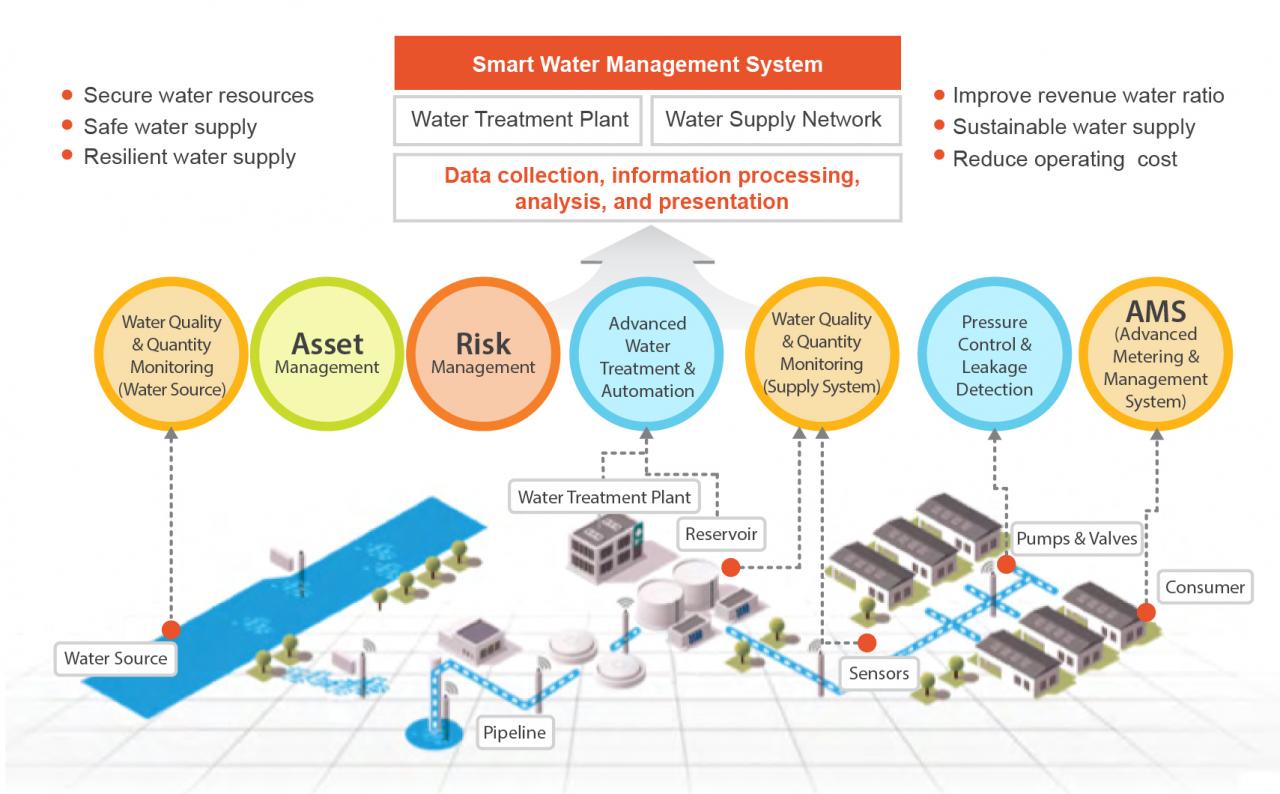
The Components of a Smart Water Network
A smart water network can include various components to improve water efficiency, quality, distribution, and disposal. Standard components typically include:
Physical Assets
These are the essential components of any water network, including pipes, pumps, tanks, reservoirs, water and waste treatment facilities, and anything water or sewage flows. This equipment may be spread over great distances, laid underground, or hidden behind walls or machines, making it especially difficult and expensive to maintain and replace in case of a malfunction.
Sensors
Sensors are a broad category of sensing devices that monitor various parameters in water networks. Depending on your facility’s requirements, you may use multiple sensors to monitor water pressure, temperature, flow rates, pH levels, quality, infrastructure health, and relevant water purity parameters (critical in some industries, like pharmaceutical manufacturing). Smart water network sensors can be as simple as thermometers placed on water pipes.
Communication Networks
While some things can be done automatically by IoT devices, most of the data collected by sensors is processed and analyzed elsewhere—typically in a cloud-based environment. Networks need reliable communication technologies to transmit the large volumes of data collected by sensors. Additionally, active IoT flow controllers need the capability to receive instructions and execute commands.
Depending on the needs of the smart water network project, various wireless communication technologies, such as 5G-enabled WiFi, radio, LoRa, and other protocols, can be used.
Data Storage and Analytics
Data collected from sensors in your smart water network is stored, processed, and analyzed to derive actionable insights. This data processing enables smart water network managers to conduct network management tasks remotely or autonomously, such as flow optimization and automated leak detection.
Some network analysis tools, like Wint Water Intelligence, employ advanced AI/ML technologies to enable predictive maintenance and immediate response to potentially negligible flow abnormalities. Undetectable without specialized AI models, these subtle abnormalities may indicate a leak that Wint’s system can automatically address by shutting down the flow at the point of failure.
Control Systems
Control systems initiate and carry out automatic responses to issues in the water network. They may be built into advanced IoT sensors or require separate systems to adjust the water flow or content. With data-driven automation, your network significantly reduces the need for manual interference and operator availability, minimizing waste and containing leaks before they can cause pricey water damage to assets and equipment.
User Interfaces
Smart water networks provide user interfaces for managing water supply, tracking usage, checking water quality, and receiving real-time alerts. For example, integrated water intelligence platforms like Wint offer your teams an extensive and customizable dashboard that enables preventative maintenance, sustainability reporting, and comprehensive visualizations of water consumption patterns.
Why Implement a Smart Water Network In Your Buildings?
Smart water networks are typically installed and maintained by water utility companies and service providers. So why should your business invest in one for your buildings? Depending on the type of structure, industry, and existing infrastructure, the adoption of smart water systems can bring numerous benefits.
Increased Operational Efficiency
The key driver to integrating smart water networks in buildings and industrial facilities is to enhance operational efficiency and reliability. These technologies can monitor usage patterns and enable rapid response to adverse events that may impact water supply or its quality. In addition, with predictive maintenance and significantly reduced water waste, smart water solutions contribute to operational efficiency in other areas (like energy efficiency and waste management).
For example, with Wint monitoring your critical water supply systems, you can detect water leaks in real-time, isolate the source of the leak, and automatically stop the water flow to the area until a professional can address the issue.
Cost Savings
Operational efficiency with smart water networks quickly turns into cost savings via lower utility bills, lower insurance premiums, equipment longevity, and reduced manual labor costs. For example, combining data, AI, and ML technologies enables an immediate response to issues with assets located in previously hard (and expensive) to-reach areas, like underground pipes and tanks. This, in turn, translates into cost savings across the board.
Sustainability and Compliance
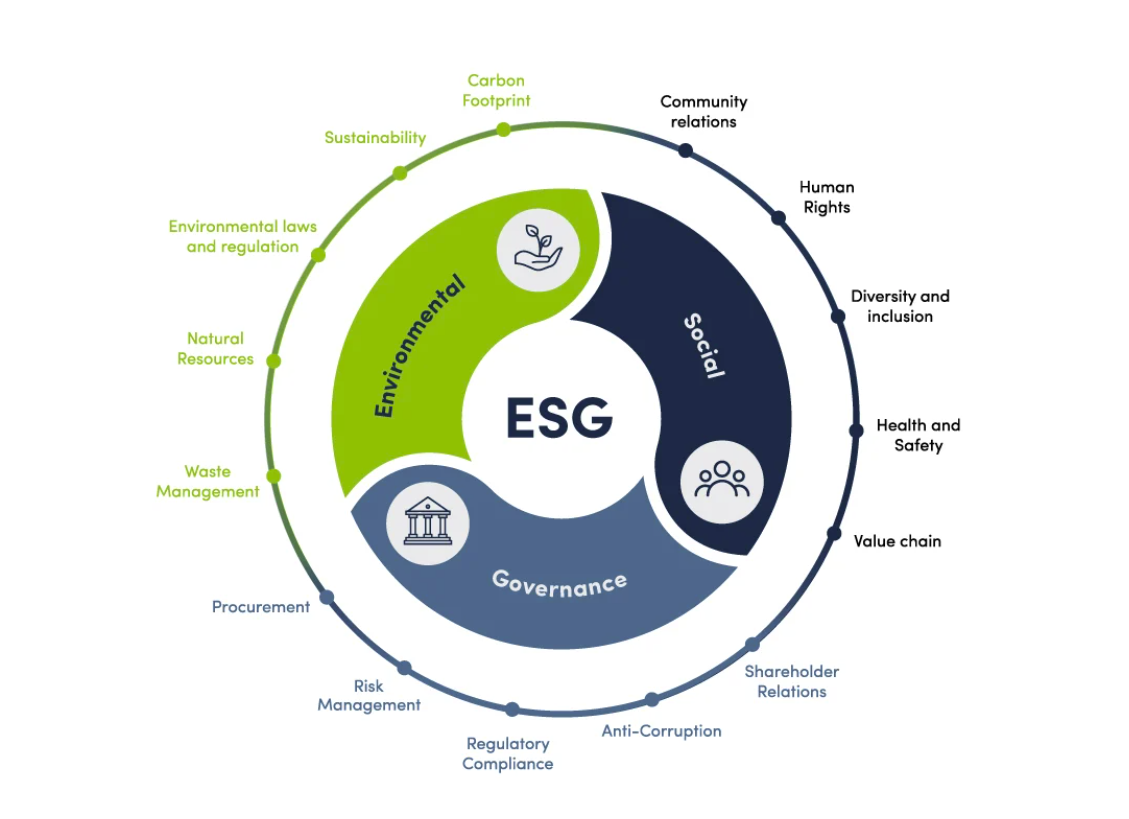
Smart water networks help inform customers, tenants, and department heads about relevant water consumption and conservation data. With granular and accessible reports and AI-generated recommendations, proving a commitment to water conservation and complying with ESG regulations is much easier.
For example, combining water consumption data with harvest yield data can help farmers lower water consumption to comply with local regulations, benefiting their business outcomes.
Transitioning to a Smart Water Network: The Challenges to Note
Investment ROI
Equipping all water assets in your facility or buildings with smart water devices can be costly. The investment required depends on the size of the network and the existing infrastructure. Additionally, installation may disrupt operations, which should be factored into the overall cost of implementing a smart water network.
Tips:
- Consider a gradual implementation, starting with strategic and critical water supply assets, where you can score “easy wins” with measurable ROI.
- Opt for IoT equipment and sensors that don’t require extensive system modifications.
- Look for indirect impacts that add value to modern networks, such as lower water risk insurance premiums and green building compliance scores.
System Interoperability
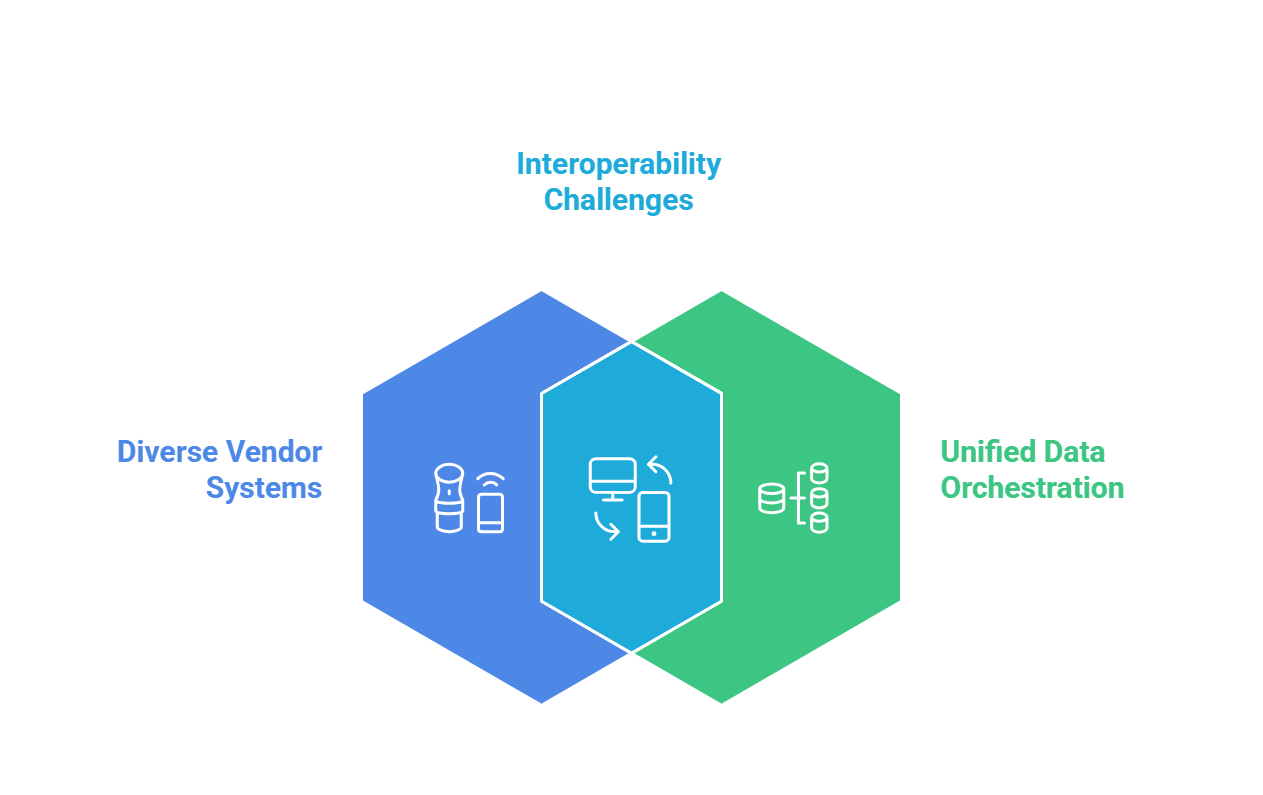
Interconnecting systems that don’t speak the same language is painstakingly complex and can strain your IT teams and infrastructure. If your existing water network employs specific sensors and systems from various vendors, you may find it challenging to orchestrate all data collection, analysis, and reporting effectively.
Tips:
- Get your IT experts involved in the smart water network selection process to ensure compatibility with your other systems (such as building management and water purification systems) and minimize data migration issues.
- Look for solutions that offer flexibility and customization to the needs of your business, as well as enterprise-grade scalability.
Data Protection and Privacy
Water systems are classified as critical infrastructure, which must comply with regulations designed to protect consumer data and system availability. As data breaches in water management systems become more frequent, businesses must protect their systems from potential security risks. Failure to protect customer data could also result in regulatory fines—not just for water leaks but also for data leaks.
Tips:
- Seek out proven and well-known solutions with turnkey compliance enablement and robust cybersecurity protections out of the box.
- Consider a managed or partially managed cybersecurity service provider to oversee the various aspects of cybersecurity of your water systems.
Limited Expertise
Installing and maintaining these networks requires a specialized skill set that is difficult to find. As a result, experts in this field are scarce and often costly to retain, making it challenging to manage installation projects effectively.
Tips:
- Upskill and reskill your existing staff to operate and maintain these networks.
- Choose solutions focused on enterprises and facility teams in industries similar to yours. Their user interfaces are much more likely to be friendly to your staff.
- Consider outsourcing the planning, installation, monitoring, and immediate response tasks.
Transform Your Water Network with AI-Enhanced Water Management
Smart water networks integrate physical and digital technologies to enhance efficiency, sustainability, and cost-effectiveness. Wint specializes in AI-powered water management solutions that optimize water use, prevent waste, and improve sustainability for water-intensive industries. With fast deployment, scalability, and tangible ROI in the shape of significant cost reductions, the platform makes your water networks smarter, more efficient, and future-proof. Contact our experts today to learn how Wint can help your business reduce costs and increase operational efficiency.