When things that are meant to stay dry get suddenly and unexpectedly very wet, you can expect it to cost you. Emergency water damage is a prevalent source of headaches for homeowners and building managers alike, with expensive repairs, potentially compromised insurance premiums, and (in the worst of cases) risk to human health and safety.
Water damage emergencies at home or in the workplace happen daily to 14,000 people in the US alone, costing billions of dollars in repair. Even if your insurer offsets the cost of repairs and maintenance teams promptly address any issue, you would undoubtedly prefer to avoid the unpleasant hassle of dealing with such emergencies in your buildings.
There are steps and best practices you can follow to prevent emergency water damage. But first, let’s get to know our proverbial enemy and what signs to look for.

What does emergency water damage look like?
Emergency water damage refers to unexpected and often sudden water leaks that require immediate action to prevent severe property destruction. It has various causes, from burst pipes to natural disasters like floods and hurricanes. Most emergencies, such as water damage in ceilings, are easy to discover with visual and audible telltale signs:
Sign of emergency water damage to walls and ceilings
- Softened drywall that cracks or sinks inward when pressed
- Discoloration, usually in the form of streaks that run down the walls
- Water rings and stains
- Flaking, stretching, cracking paint
- Musty odor
Signs of emergency water damage to floors
- Discoloration
- “Buckling” of flooring materials at the seams and peeling upward
- “Cupping” of flooring planks with the edges curling upward
- “Crowning” of the central part of the flooring material with the center raised
- Unpleasant odor
Other signs of emergency water damage
- Pooling or standing water
- Peeling wallpaper
- Electrical issues
- The sound of dripping or running water

[ Source: SERVPRO ]
8 Steps to Manage Emergency Water Damage
1. Shut down the source of water ingress
When you discover emergency water damage, the first thing to do is stop the water flow to prevent more extensive damage and flooding. Locate the source of the flow and shut it down.
The best approach for commercial and multi-family residential buildings is automatic leak detection fitted with shutoff valves. Wint’s smart water management platform features IoT sensors and sensor-activated shutoff valves that automatically cut off the water supply when a leak is detected, drastically reducing the potential for extensive water damage. The Wint solution also sends real-time alerts to relevant teams and stakeholders to facilitate swift action to mitigate water damage.
2. Ensure safety of life and property
While you shut down the water flow causing emergency water damage, or perhaps even before, you must ensure that human lives are not at risk. This may mean evacuating tenants or personnel and shutting down the electricity and gas supply to the affected areas when relevant.
To protect valuable items, sensitive electronic equipment, and property like wooden furniture from water damage, you may need to move or cover the objects in the affected area somewhere where they can be dried and assessed for damage.
3. Assess and document the water damage
Once you’ve addressed the immediate and critical tasks of ensuring safety and stopping the water flow, it’s time to take a step back and evaluate the damage done. This evaluation step entails photographing and filming the damage to walls and ceilings and any visual signs of water intrusion in the structure.
For insurance purposes, you must also document the steps you took to prevent and mitigate emergency water damage. Insurance providers often require detailed information to process your claim and approve it efficiently.

[ Source: My Conveyancing Specialist ]
4. Notify relevant authorities and stakeholders
Depending on the type, extent, and severity of the emergency water damage event, you may need to involve emergency services, authorities, building owners, tenants, and your insurance carrier. Sometimes, you may need to hire a professional water damage management service provider to fully restore the affected areas.
5. Extract the water
Water seeping through the floors can cause additional damage, so covering all and any standing water in the structure is essential. In some emergency water damage scenarios, such as extreme weather events, the water may drain naturally out of the building. With small and contained spills, your maintenance crew may be able to mop or direct the water toward a sewage opening. However, if there’s too much standing water for your teams to manage using buckets and mops, you may require a commercial wet vacuum to manage water removal.
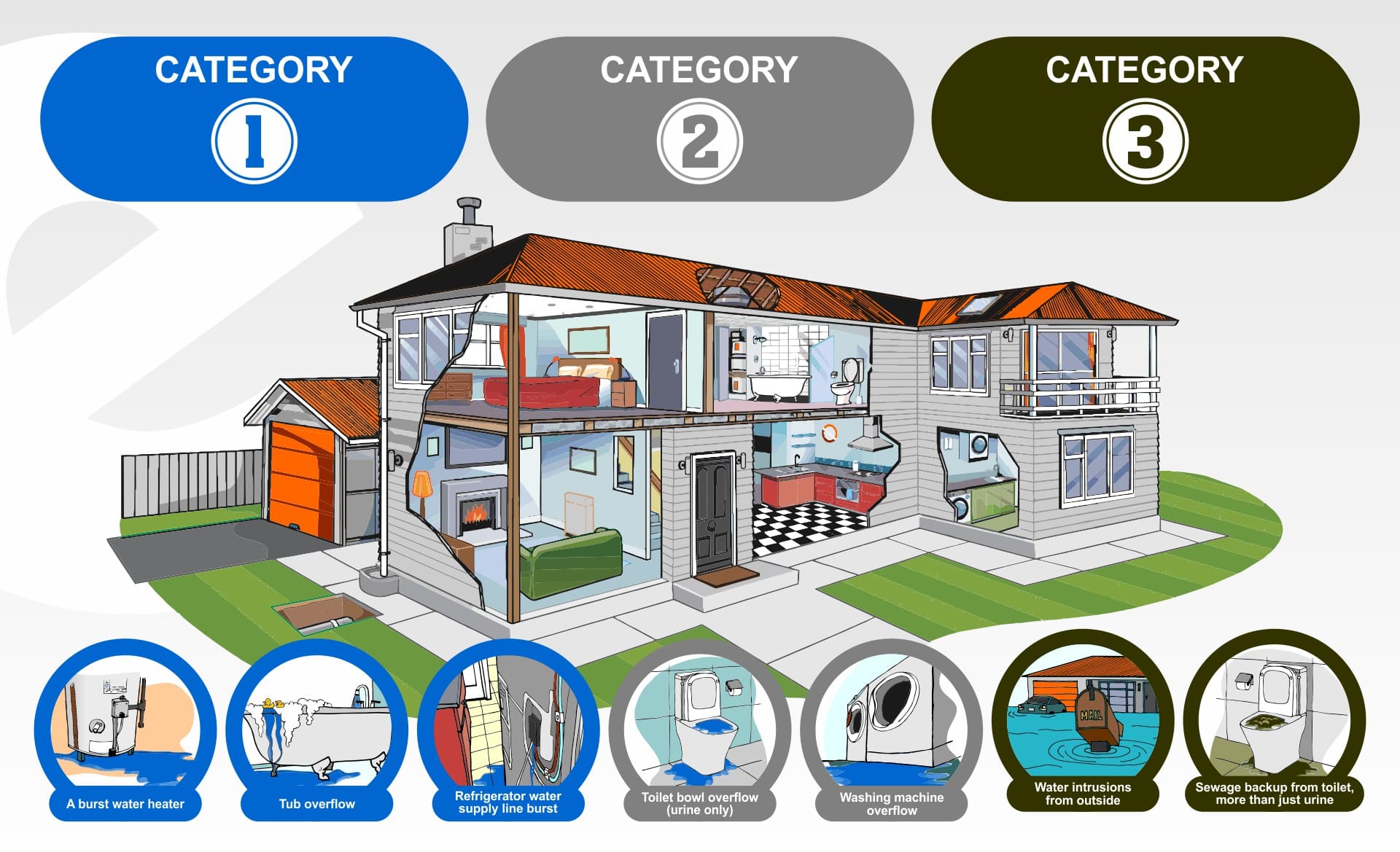
The type of water that caused the emergency water damage—Category 1, 2, or 3—is essential in directing how to handle water extraction and approach the following steps.
- Category 1 Water is sourced from a sanitary source and does not pose a risk to human health alone, such as leaking water supply pipes or HVAC condenser units.
- Category 2 Water can cause sickness or significant discomfort when consumed or in contact with the skin. This type of water may contain microorganisms or nutrients for microorganisms as well as organic or inorganic matter (chemical or biological)—for example, washing machine overflows, dishwasher discharge, or leaks from sink drainage pipes.
- Category 3 Water is the most hazardous to human health and is highly contaminated with pathogens, toxins, and dangerous chemicals. It includes sewage, ground surface water from flooded rivers or streams, pesticides, and toxic organic substances.
[ Source: Construemax Property Restoration ]
When managing emergency water damage from Category 2 or 3, it’s essential to wear proper PPE (personal protective equipment) and remember that unaddressed Category 1 water can become contaminated if left untreated, making it more dangerous to the health of your maintenance staff.
6. Dry and dehumidify
If the emergency water damage is minor and was caused by Category 1 or Category 2 water, good air circulation and help from your maintenance teams should be enough to dry all the affected areas and materials properly. That said, mold can begin to grow before the materials have thoroughly dried—in as little as 72 hours—so you may need to place fans and dehumidifiers in the affected area. Dehumidifiers will help remove the excess moisture from the air and promote evaporation as quickly as possible.
7. Sanitize and disinfect
Water damage can cause long-term health issues for tenants and visitors to your building due to the introduction of harmful bacteria and pathogens from the water intrusion event. Treat the affected areas with disinfectants and mold growth prevention agents. Sanitize the environment before it can be approved for occupancy.
8. Repair and restore
The final step in managing emergency water damage entails replacing and repairing compromised structures and restoring materials damaged by the water to their previous pre-damaged state. It’s important to thoroughly inspect any potential damage to the building foundations or trapped water that may become a safety hazard if not addressed.
Another critical part of this stage involves identifying and repairing the cause of the water damage so that water and power supplies can be restored and the building can return to normal operations.

[ Source: SafetyCulture ]
How to Avoid Emergency Water Damage Events: Top Maintenance Tips
The best way to manage emergency water events is to avoid them in the first place. Adopt a proactive approach to water intrusion prevention and pre-incident planning to smooth emergency water damage management.
- Conduct regular inspections and maintenance of all water-related appliances, fixtures, heaters, pipes, HVAC units, plumbing systems, roof exterior, and cooling towers.
- Employ leak detection technology and automatic shutoff valves. For large-scale commercial structures and multi-family residences, Wint provides an enterprise-grade solution using AI and IoT technologies to detect and stop water leaks.
- Prepare an emergency water damage management plan that includes a list of emergency contacts, procedures for shutting off the water supply, and recommended steps for managing emergency water damage.
- Educate your tenants and train your teams in avoiding, detecting, and responding to emergency water damage events.
Preventing emergency water damage from water leaks with Wint
Dealing with a water damage incident is an experience best avoided, but when it occurs, swift management and mitigation are crucial.
Today, you can harness the power of IoT and AI technologies to detect and stop leaks at the source, limiting the damage and cost of water intrusion caused by burst pipes or even small cracks that can wreak havoc on your property over time. Wint Water Intelligence system is built with scalability, allowing you to manage water efficiency and prevent water leaks across multiple properties and buildings.