LEED Platinum certification is considered the highest mark of excellence for sustainability in construction and building management. Amid the rush to net zero across industries, certifications like LEED are vital to demonstrating companies’ commitment to reducing environmental impact and getting the recognition they deserve for their sustainability efforts.
In the first half of 2023, less than 8% of LEED-certified multifamily projects in the US were awarded the LEED Platinum level. Achieving this level requires a significant investment from the building owners or developers, with factors such as materials, energy, water, and innovation to consider.
What is LEED Platinum?
LEED (Leadership in Energy and Environmental Design) is a globally recognized global green building rating system. Developed by the USGBC (U.S. Green Building Council), the LEED certification standards offer a comprehensive framework that promotes ESG policies throughout the life cycle of built environments.
Currently in its 5th edition (LEED v5), LEED certification uses a credit-based system to rate the sustainability of buildings according to requirements in numerous areas. The categories include:
- Integrative Process
- Location and Transportation
- Sustainable Sites
- Water Efficiency
- Energy and Atmosphere
- Materials and Resources
- Indoor Environmental Quality
- Innovation
- Regional Priority
Each category may have multiple subcategories. For example, water efficiency encompasses minimum water efficiency, water metering, reporting prerequisites, and three other areas where you can score credits.
These are:
- Enhanced water efficiency (up to 6 points available)
- Water metering and leak detection (1 point)
- Water reuse (up to 2 points).
In total, you can get nine credits for Water Efficiency based on the latest version of LEED.
LEED certification levels
Projects must undergo an audit and verification process by the Green Building Certification Institute (GBCI) to become LEED-certified. At the end of the audit, they are assigned a certification level according to the number of points they’ve accumulated across the relevant categories:
-
Certified (40-49 points)
-
Silver (50-59 points)
-
Gold (60-79 points)
-
Platinum (80+ points)
LEED Platinum is the highest rating level in the LEED certification scheme. It is awarded to projects that adhere to the highest standards of green building and demonstrate the value of ESG initiatives.

Source: Rubicon
How the LEED certification works
Becoming LEED certified is a straightforward journey, regardless of project type or scope. It entails:
- Define your LEED certification level goals. Ideally, you want to aim for LEED Platinum certification.
- Choose the appropriate LEED rating system for your project. The USGBC offers specific rating systems for projects according to type and use. For example, schools, data centers, warehouses, and shopping malls have different rating systems that address their unique functionality and environmental footprint.

Source: JEMAI Environmental
- Register your LEED project and pay the required fees. The fees depend greatly on your LEED certification goals and the size of your project. For commercial buildings, registration fees can range from $900 to $1200 for USGBC members or $1000 to $1500 for non-members. Certification fees are slightly more expensive, ranging from $2000 to $30.000 or above for non-members.
- Compile and submit the evidence to demonstrate compliance. Since the GBCI relies entirely on the data and documents you submit, it’s imperative to record and document all the relevant information about your project.
- Wait for your project review and assessment by the USGBC’s Green Building Certification Institute. The review process typically lasts 20 to 25 business days.
Why is the LEED Platinum certification so important?
Achieving LEED Platinum certification is challenging and only granted to a handful of innovative built environment projects. That said, gaining any level of LEED certification is bound to introduce several benefits that are key to business success in the industry in 2024 and beyond.
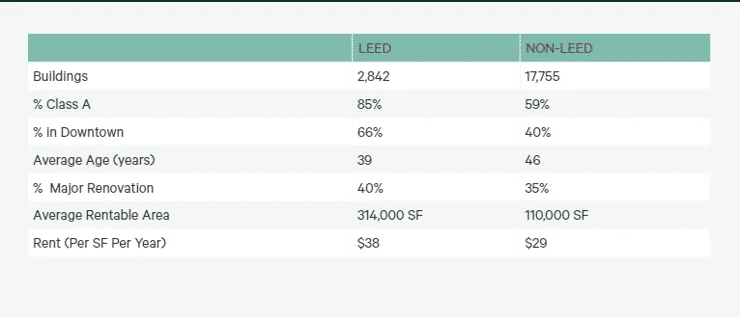
Much like achieving the equivalent BREEAM certification, there are various benefits to complying with the requirements of LEED Platinum certification. Many of these depend highly on the type and size of the project in question. Some of the potential benefits of LEED Platinum certification (and other LEED certification levels) are:
Financial and economic benefits
- Reduce operational costs
- Increase asset value
- Get higher rental rates
- Showcase brand leadership
- Pay lower insurance premiums and/or deductibles
Human health and wellbeing
- Enhance employee and occupant health and safety
- Contribute to better air quality
Environmental impact
- Lower CO2 carbon emissions
- Conserve water and eliminate water waste
- Decrease energy demand
- Reduce and redirect waste
What you can do to achieve the LEED Platinum certification
Gaining the LEED Platinum level status requires exceptional excellence across categories and a score of over 80 points out of a potential 110. This means thinking ahead, building an ambitious ESG strategy, and aiming high in the most impactful categories in your LEED certification plan while staying cost-effective. Some strategies companies should consider include:
Choosing green materials & design
Integrating innovative eco-friendly design and materials in your construction or building future-proofing as part of the renovation is one cost-effective way to score LEED points. For example, you can employ recycled materials to reduce costs while meeting LEED criteria for material reuse.
Optimizing energy efficiency
Conserving and minimizing the energy demands of a structure is an essential aspect of LEED certification. You can achieve this by installing efficient HVAC systems, enhanced insulation, energy-efficient lighting, and integrating electricity-generating technologies like solar panels and wind turbines.
Intelligently managing and conserving water
Water efficiency, conversation, and management are vital in building design, construction, and throughout its lifecycle. The LEED rating system includes a category for “Water efficiency.” As explained above, this category can get you up to nine points based on the latest rating system version for new construction. By using water-efficient fixtures and smart technologies that enable you to monitor, manage water consumption, and avoid leaks, you can achieve these 9 points that are up for grabs.
In addition to scoring the LEED certification points that bring you closer to LEED Platinum status, you can significantly reduce water consumption costs, prevent water waste, and even protect your assets from potential water damage. In terms of Return on Investment, this investment in water efficiency brings operating and maintenance long-term savings, lower risks of water damage and associated costs, higher marketability, stronger regulatory compliance, and potentially lower insurance premiums.
One part of a holistic approach to water management and conservation combines water monitoring and control with affordable IoT and enterprise-grade AI-powered solutions like that offered by Wint’s Water Intelligence platform. By monitoring your water usage in real-time, Wint helps you detect and mitigate water leaks at the source, reducing waste and helping you cut carbon emissions.
Improving indoor environment
Enhancing the quality of the environment inside and outside your structure is essential not only for LEED certification but also for the health and well-being of the employees, tenants, and visitors. Some effective strategies you can employ include smart use of natural light, automatic temperature and humidity monitoring and control, and enhanced monitoring maintenance practices.
6 Examples of LEED Platinum Buildings
As of 2022, there were over 3,800 LEED Platinum-certified buildings worldwide (out of approximately 100,000 LED-certified structures). Here are a few notable examples:
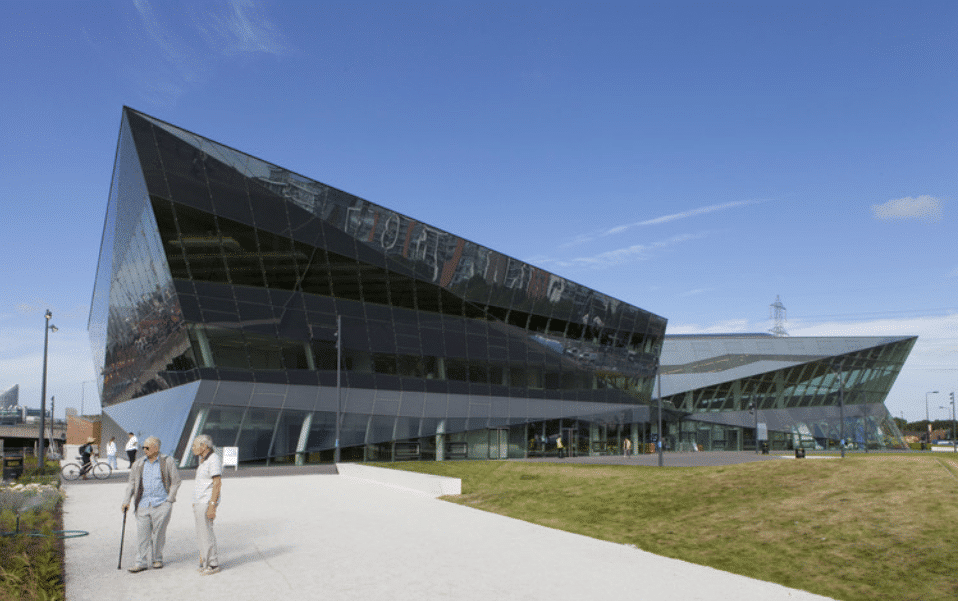
1. The Crystal, London, UK
Located on the waterfront at the western end of the Royal Victoria Docks in East London, The Crystal building is the first in the world to achieve LEED Platinum certification and BREEAM Outstanding status.
The Crystal employs a photovoltaic array to produce 20 percent of the total electricity demand, and only 10% of the water used in the building is sourced from the public main, with the majority coming from on-site rainwater harvesting tanks and black water reclamation. In addition, the building has operational monitoring, control, and automation systems for water and power that are managed remotely from Frankfurt, Germany.
Source: ArchDaily | courtesy of Wilkinson Eyre Architects
2. Taipei 101, Taipei, Taiwan
Taipei 101 is the world’s first building over 500 meters tall to receive LEED Platinum certification three times in a row.
The building employs MERV 13 filters, green cleaning techniques to lower CO2 and TVOC values, and a waste reduction and recycling program with a 70% waste recycling rate. Moreover, Taipei 101 features over 50 different energy-saving projects, earning it an impressive score of 90 points in its latest LEED Platinum certification process.

Source: Britannica | Elwynn/Shutterstock.com
3. Shanghai Tower, Shanghai, China
Another prominent green skyscraper that has achieved LEED platinum status certification is the Shanghai Tower in China. At 632 meters tall, it features a unique tapering spiral-shaped top to minimize wind loads. It employs around 50 green technologies to reduce the structure’s carbon footprint by 34,000 tonnes annually.
Integrating the measures necessary to achieve LEED platinum certification added a total cost of 5% to the project, which translates into 54% savings on energy consumption (556,000 dollars annually). The building uses wind power to generate the electricity necessary for external illumination and natural gas to produce electricity and heating.

Source: NPR | Shen Zhonghai/Gensler
4. One Vanderbilt, New York (USA)
One Vanderbilt in New York is one of the 30 tallest buildings in the world and has achieved both LEED Platinum and WELL certifications for sustainability design and construction. The building was constructed using innovative methods and materials, including recycled materials and wood sourced from managed forests. One Vanderbilt features a 1.2-MW cogeneration plant, rainwater collection systems, and energy-efficient systems throughout the structure.

Source: Courtesy, SUMMIT One Vanderbilt
5. Amazon HQ2, Arlington, Virginia (USA)
Amazon is working hard to reach its sustainability goals, so its second headquarters in Arlington, Virginia, was built with sustainability from the very foundations of the campus. During construction, 82% of the waste was diverted to recycling centers instead of landfills.
In operation, HQ2’s buildings are powered 100% by renewable energy. They reuse rainwater, shower water, and HVAC condensate to reclaim up to 7.5 million gallons of water annually through rooftop collection tanks and an extensive greywater reclamation system.

Source: aboutamazon.com
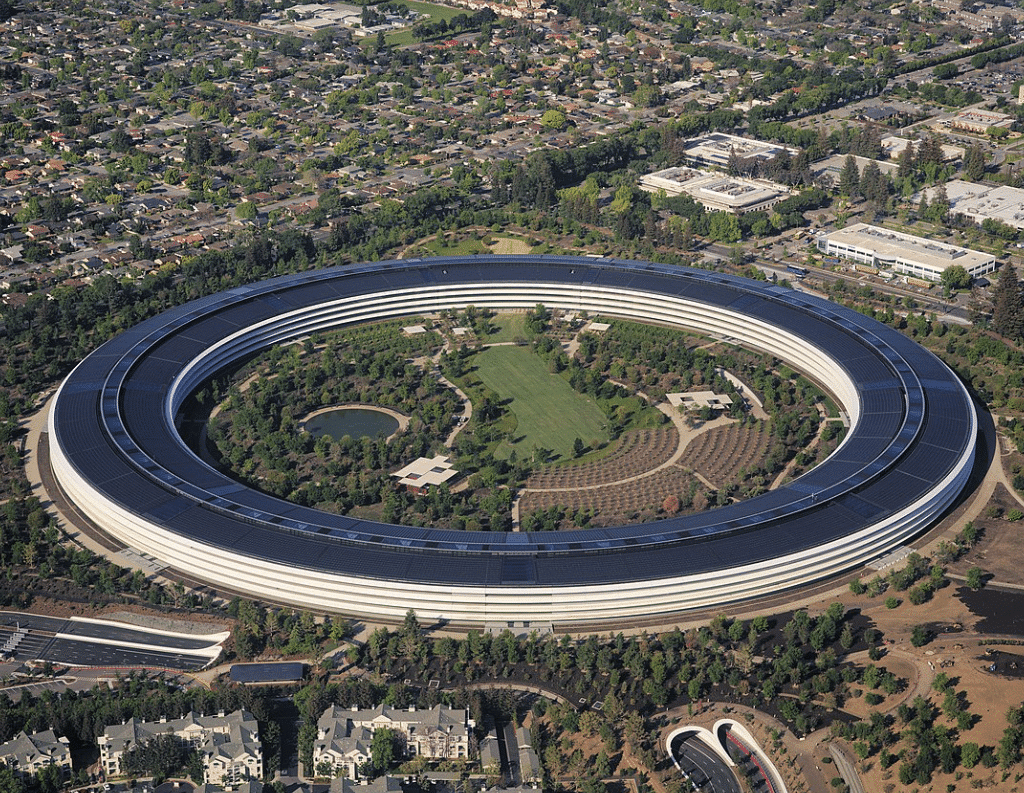
6. Apple Park, Cupertino, California (USA)
One of the largest LEED Platinum-certified structures in the world, the Apple Park is another futuristic tech giant HQ powered by renewable energy sources. To conserve power or air conditioning, Apple Park was designed to draw in fresh air and uses recycled water to irrigate more than 9000 trees planted throughout Apple Park, which accounts for 80% of the campus.
Source: Wikipedia | Credit: Daniel L. Lu
Getting closer to LEED Platinum certification with Wint
The LEED Platinum-certified buildings above exemplify outstanding excellence in promoting sustainability in the built environment. One of the categories for LEED certification that you should pay attention to is water efficiency. It addresses the issue of water conservation and reuse in the built environment through technological innovation in gray water reclamation, rainwater collection, and comprehensive management of water supply and consumption.
It’s also worth noting that a complement to the LEED rating system, LEED Zero certification, verifies the achievement of net zero goals in water, carbon, energy, and waste. LEED Zero Water is awarded to buildings with a potable water use balance of zero over one year.
Wint’s Water Intelligence systems help you monitor and control water flow in your built structures throughout the project lifecycle. It helps you score the 9 points available in the water category for water efficiency (up to 6 points), water metering and detection (1 point), and water reuse (up to 2 points). Scoring high in the water category takes you one step closer to the coveted LEED Platinum status.
Powered by AI, advanced signal processing and cutting-edge IoT devices, Wint delivers a centralized enterprise-grade water management solution with exceptional ROI.